
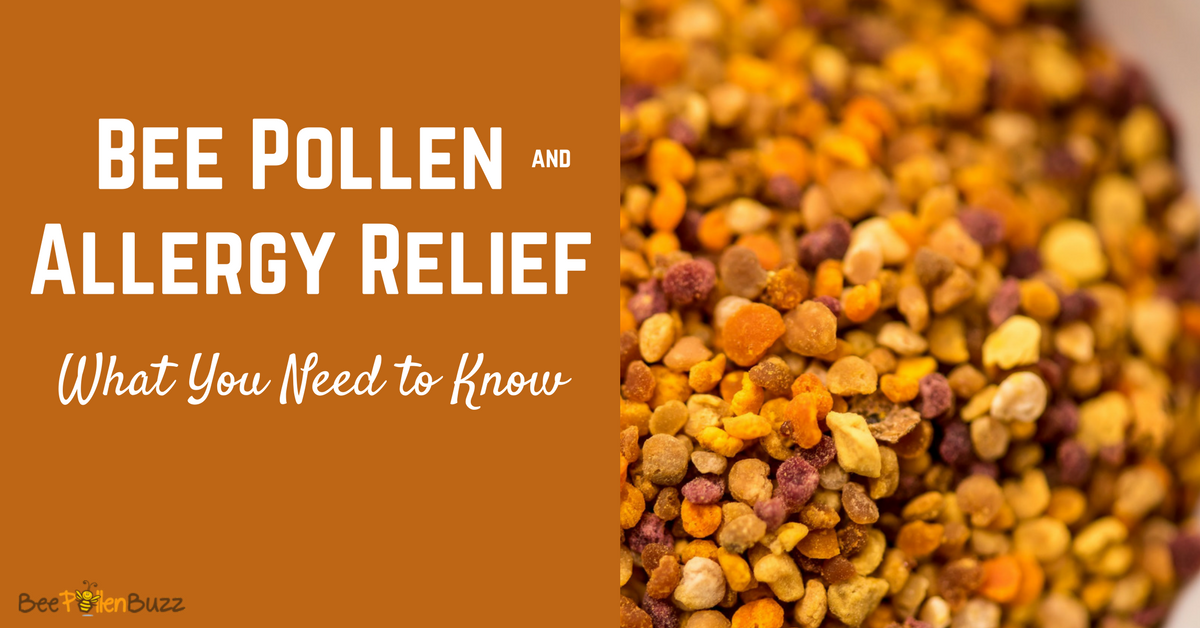
Bee Pollen for Allergies
My Top 10 Tips on How To Treat Your Allergies Naturally With Pollen & Other Cutting Edge Nutrients

by Angela Van Alten, Nutritionist and Beekeeper's Daughter
One of the reason's why bee pollen is such a major part of my life and more specifically, my husband's life, is because of the severe allergies he suffers with each spring and summer.
He has suffered from allergies since childhood. Come June each year, life has been 'difficult' for him to say the least.
Since we got married, I've had him taking bee pollen daily as a remedy to try and rid himself of the burden of pollen, tree and grass allergies.
Taking quality bee pollen combined with some nutritional modifications and supplements has allowed him to see dramatic results in just 3 months.
The results he attained shocked him to say the least because over the years he has tried many, many different therapies and herbs, all with limited or no success. He saw dramatic results with bee pollen with no side effects (so has my sister and mother) and so have countless customers in our Honey Shop over the years.
If you suffer from any type of seasonal allergy, consider trying bee pollen this year. Not only are there strong testimonials backing the efficacy of bee pollen as an allergy remedy, but several university studies exist with one indicating a 75% improvement for almost three quarters of the studies participants.
Bee Pollen and Allergies: The Studies
Consider the following data as reported in the Journal of Allergy:
- 73 % of patients with hay fever averaged a 75% improvement in their symptoms when given Bee Pollen orally
- 78% of asthma patients averaged a 75% improvement after taking Bee Pollen
- 17.8% of hay fever sufferers and 33.3% of asthmatics experienced a complete improvement on oral Bee Pollen supplements
- the earlier Bee Pollen supplementation was begun prior to allergy season, the greater the rate of its success
Here is another positive study as reported in the Journal of Phytotherapy Research in April 2009.
Scientists at the Juntendo University School of Medicine in Japan fed mice bee pollen on a daily basis.
What they found was that the number of mast cells activated was reduced in a dose dependent manner (the more bee pollen they gave the mice, the better the result).
Mast cells are responsible for the production and release of histamine when you come into contact with an allergen. Histamine triggers the inflammatory response you know as sneezing, itching, a runny nose and coughing. Hence the term anti-histamine when it comes to allergy drugs.
Reducing the amount of histamine being produced is VERY good for allergy sufferers. This study supports bee pollen's ability to do this.
Bee Pollen for Allergies: Testimonials
From Shaun A.
I normally don't contact sellers unless I have a question about a product, but I feel compelled to extol your bee-pollen.
I suffered from very severe seasonsal allergies. To put this into perspective, prior to the bee-pollen therapy, I spent nearly every spring of my 27 years with contant asthma attacks, eyes that would shut from swelling, and sneezing to the point of nose bleeds.
By Spring, I loaded up on Benadryl, sometimes taking 100mg (the max recommended is 50mg) but I needed to breathe.
I saw on TV that local honey was used as immunotherapy because of the pollen the bees would leave behind. So I just ordered your bee polen, since you guys are right in my radius (I am in Northern PA, so I am closer to Canada than to most of my country).
After 2 months of first using it, the Spring came. I was able to take 1 zyrtec and be symptom free. Two years later, today, the pollen count is an 11/12, something that used to send me possibly to the ER.
My windows are open; my nose is completely clear.
Laura W. recently sent me this...
"P.S. I love the Bee Pollen (2 tbsp/day), and it definitely made a difference in hayfever/pollen problem."
As Told by Carrie L. from Maine
"My husband (33, active, healthy) has terrible allergies! When I met him he was allergic to my dog and that was a very big problem for us. There was NO WAY I was going to part with my 4-legged companion but I really wanted him around as well so I started looking into natural antihistamine blockers.
I started reading up on bee pollen and was astounded by the testimonials. However, testimonials can come from just about anywhere so I bought a small container of bee pollen granules and we gave it a try. My husband didn't feel the effects right away but over time and without our really noticing, his eyes stopped itching and watering after he mowed the lawn, he didn't seem to have such a negative reaction to my dog's fur and even his mother's cat was tolerable!
My husband's daughter is 6 and also has allergies to pollen, dander, dust and things of that nature so we started giving her a small amount of bee pollen with her breakfast and dinner and sure enough, she has suffered far less from her allergy symptoms. Even after they stopped taking it for a while their symptoms were less severe. However, we ran out, spring is here and so are their allergies! While bee pollen does not cure seasonal allergies or even relieve the symptoms immediately, it certainly helps to make them manageable once you have started to make it a regular part of your diet."
My Top 10 Tips to Remain Allergy Free This Year
- 2 - 3 months before summer (the earlier the better), gradually introduce quality bee pollen into your diet. Take 1 - 2 tablespoons per day after you have gradually introduced it into your diet. Read my article on how to properly desensitize yourself. Remember to start with very small amounts.
- Try removing gluten from your diet for 4 weeks. Foods containing gluten are highly allergenic due to their overconsumption and GMO status. Observe if your symptoms get better or worse.
- Remove any dairy products from your diet for 4 weeks. Observe if you symptoms get better or worse.
- Take extra Vitamin C and Quercetin. I recommend taking 3 - 5 grams during allergy season. These are both natural anti-histamines.
- Take 1 – 2 tablespoons of raw, local honey each day. Click here to read a great article on using local honey for allergies.
- Control your stress levels (exercise, sleep, mediation, yoga, breathing) If stress is an issue, try taking the product Ultimate Anti- Stress to help you deal with stress.
- Use an immune balancing product like ImmunoSmart or Moducare. This will help your immune system to react properly to allergens that you encounter. .
- Change your fabric softener, laundry detergent, household cleaners to natural, green non-allergenic brands with no fragrances. Chemical overload stresses the liver and weakens the immune system.
- Remember to change your furnace filter every 3 months.
- Avoid sugar and food with added sugar. Sugar suppresses and confuses your immune system for up to 8 hours after ingestion.
Bonus Tips
- Avoid foods containing sulfites and sulfates. These are allergens to many people.
- Consume as much of your food organically as possible. Pesticides and insecticides burden your immune system.
- Increase your fiber intake to 20g per day minimum. If you don't eliminate properly, your body re-absorbs toxins which places a tremendous burden on your health.
- Get a Food Sensitivity test from a Naturopathic Doctor to see what foods upset your immune system. We had this done for Mark - the results were unbelievable.
Why Bee Pollen Works for Allergies
What is difficult for many doctors and others to comprehend is the concept of eating substances to which they know they are allergic.
For example, why would I eat bee pollen if I'm allergic to pollens?
The concept is similar to vaccinations.
When you put a small amount of the seemingly harmful irritant (bee pollen from local flower pollens) into your body, your immune system builds defenses or immunity against the foreign substance.
This will make the immune system “ready” to handle any of that substance in larger quantities the next time it comes into contact with it. So there is no “hyper-reaction" like sneezing, itchy eyes or rashing out.
The outcome is that over time your body becomes less and less sensitive to the pollens, grasses and trees come spring and summer time and you remain allergy free.
Additional Burdens to Your Immune System:
Remember, an allergic reaction is a symptom of a confused, overburdened immune system. The more you 'burden' it, the more likely you are to experience allergy symptoms.
Try to avoid some of the following as they are the most common allergens and add stress to your already confused immune system. Avoiding gluten, dairy and sugar works miracles for many.
- Gluten (found in wheat, oats, spelt and many grains)
- Dairy
- Sugar (watch your labels as its in everything these days)
- Stress
- Being constipated or having less than one bowel movement per day
- Dehydration (consuming less than 8 cups of water per day)
- Alcohol
- Chemicals (cleaning products and personal care products are the worst culprits)
- Pollution
- Cigarette Smoke
Foods Most Commonly Linked with Allergy Symptoms:
Try doing an elimination diet to see if removing some of these very common foods helps your symptoms. I've personally witnessed removing dairy, gluten and sugar almost eliminate seasonal allergy symptoms in clients.
- Dairy
- Gluten
- Soy
- Nuts
- Chocolate
- Colas
- Sulfites
Using bee pollen for allergies is a very, very effective solution for many. Remember to start consuming it as early as possible BEFORE allergy season starts for maximum relief. Also consider making some dietary modifications. It has been my experience that removing some of the common allergens from your diet helps dramatically in helping to support your immune system during allergy season.
If you've had success using bee pollen for allergies, be sure to post your results below for others to read and learn.
Recommended Bee Pollen Products
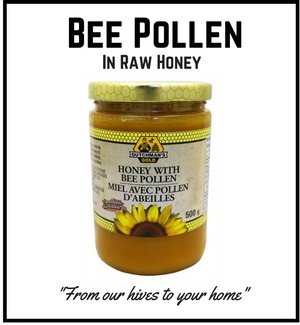
There are many bee pollen products on the market, many of which are very poor quality with very suspect ingredients from suspect countries. I regularly get solicited by companies from all over the world selling cheap, low grade bee pollen that is not fit for human consumption. I use and recommend Dutchman's Gold Bee Pollen. You can find Dutchman's Gold bee pollen products here.
Explore More Health Benefits from the Hive:
Honey for Cough, Colds and Sinus Infections
Recent research clearly indicates honey's ability to kill the bacteria responsible for sinus infections. It's safe to say - use honey for sinuses!
Honey and Allergies
How to use local honey for allergies by Angela, RNCP and daughter of a beekeeper!
Local Honey for Allergies
How and why you should use local honey for allergies at Bee Pollen Buzz.com.
†These statements have not been evaluated by the Food and Drug Administration. This product is not intended to diagnose, treat, cure or prevent any disease.
|
|
|


BeeProof™ your health with bee pollen, royal jelly and raw honey
Stay Connected With Us



CONNECT WITH US
These statements have not been evaluated by the Food and Drug Administration. This product is not intended to diagnose, treat, cure or prevent any disease. If you are pregnant, nursing, taking medication, or have a medical condition, consult your physician before using this product.
Disclaimer: The information on Bee Buzz.com is provided for educational purposes only and is not intended to treat, diagnose or prevent any disease. The information on this website is not intended to replace a one-on-one relationship with a qualified health care professional and is not intended as medical advice. It is intended as a sharing of knowledge and information from the research and experience of Angela Ysseldyk and her community. We encourage you to make your own health care decisions based upon your research and in partnership with a qualified heath care professional.
New! Comments
Do you have something to say about what you just read! Leave me a comment in the box below. I'd love to hear from you!